
After 25+ years of engineering and testing dozens of concrete countertop sealers, we’ve learned what separates products that fail within months from those that
last decades. Here’s what actually matters:
The 5 Critical Factors in Choosing a Concrete Countertop Sealer
1. Stain and Acid Resistance
Your countertop may encounter red wine, lemon juice, coffee, oil, soap or simply plain water. A good sealer resists all of them without staining or etching. We test by leaving aggressive stains on sealed concrete for 24 hours and checking for penetration.
Most penetrating sealers and wax products fail this test. Topical urethane sealers perform best when properly formulated. Look for documented testing against acids and household stains.
2. Long-Term Durability
Your sealer should resist scratches and daily wear for years without reapplication. If a sealer markets “easy annual touch-ups,” it’s admitting poor durability.
High-quality urethanes bond chemically with concrete and create wear-resistant surfaces that last. Avoid products requiring yearly resealing.
3. Food Safety
For countertops that contact food, the sealer must be food-safe once cured. Look for compliance with FDA guidelines for indirect food contact. Many sealers claim “non-toxic” without food contact testing. Water-based urethanes generally perform better than solvent-based products.
4. UV Stability and Outdoor Performance
For outdoor concrete (kitchens, bars, fire pits), UV stability is critical. Many sealers yellow or degrade in sunlight within months.
Not every project needs outdoor capability, but if yours does, confirm UV-specific formulation. Standard interior sealers fail outdoors quickly.
5. Ease of Application
Traditional professional urethanes required 2+ days with strict environmental controls. Modern formulations have improved dramatically.
Professionals need speed without callbacks. DIYers need simplicity – single-component systems are more forgiving than two-part mixes. Choose based on your skill level and timeline.
For Professional Fabricators, Commercial Projects, and Outdoor Applications: Omega Concrete Countertop Sealer
After years of frustration with slow-curing, difficult-to-apply professional sealers, we developed Omega in 2017. It’s the only sealer that excels at all five critical factors while being faster and easier to apply than traditional urethanes.
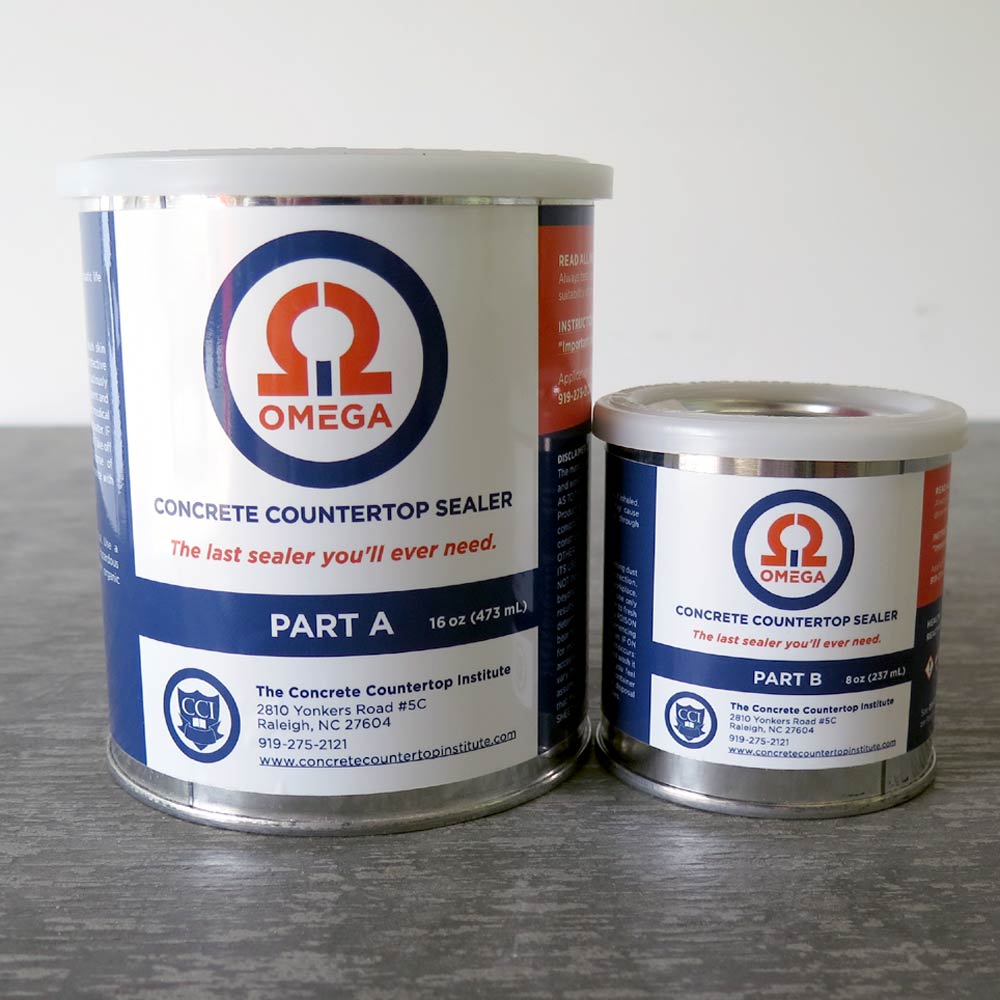
How Omega Performs on the 5 Critical Factors
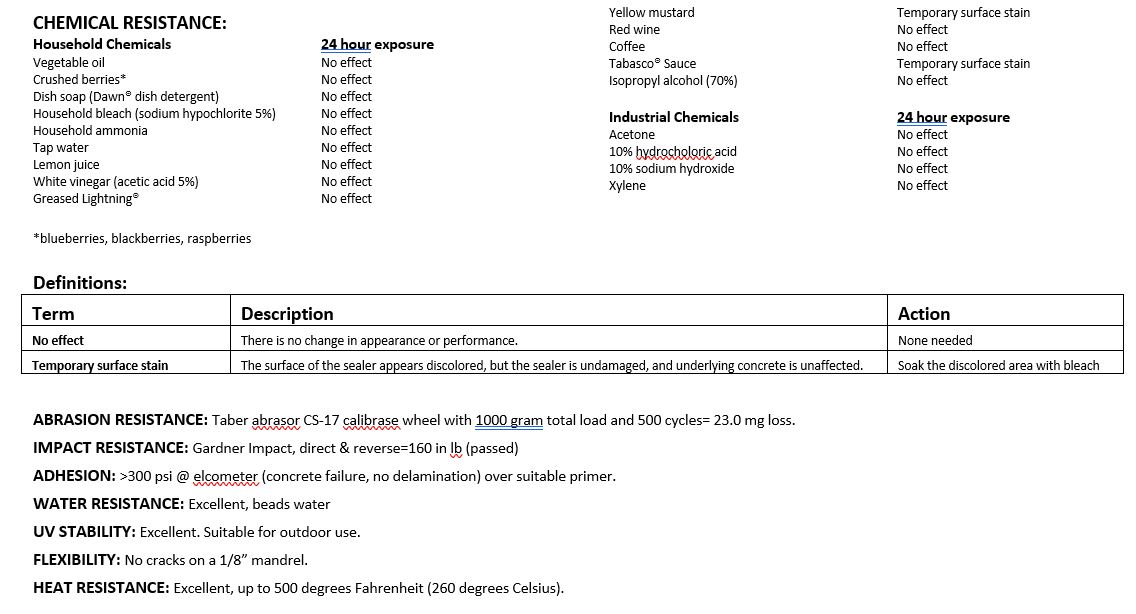
Stain and Acid Resistance: Omega provides exceptional protection against red wine, lemon juice, coffee, oil, and other aggressive stains. We’ve tested it extensively – 24-hour exposure to harsh staining agents leaves no penetration or discoloration.
Long-Term Durability: Omega forms a chemical bond with concrete and delivers superior scratch and abrasion resistance. No annual resealing required. Apply it once and you’re done – which is why professional fabricators trust it for high-traffic commercial installations.
Food Safety: Omega cures food-safe and complies with FDA guidelines for indirect food contact. Water-based and non-toxic once cured.
UV Stability and Outdoor Performance: Unlike most sealers, Omega is UV-stable and specifically formulated for both indoor and outdoor use. It won’t yellow, chalk, or degrade in sunlight – making it ideal for outdoor kitchens, bars, and fire pits.
Ease of Application: This is where Omega revolutionized professional sealing. Traditional pro urethanes required 2+ days of application time. Omega lets you seal in 2 hours with only 15-30 minutes between coats. You’re done in hours, not days, with no callbacks.
Here are the test data for Omega:
Why Professional Fabricators Choose Omega
Over 6,000 professional fabricators and DIYers have used Omega. Here’s what sets it apart:
- Fast: Seal in 2 hours instead of 2 days
- Forgiving: Much easier to apply than traditional pro urethanes – rolls on without streaks or bubbles
- Versatile: Works on any concrete mix, indoor or outdoor, wet areas like showers
- Proven: Trusted by thousands of pros for commercial kitchens, outdoor installations, and high-end residential projects
- Natural appearance: Low sheen, color-enhancing finish – no plastic look
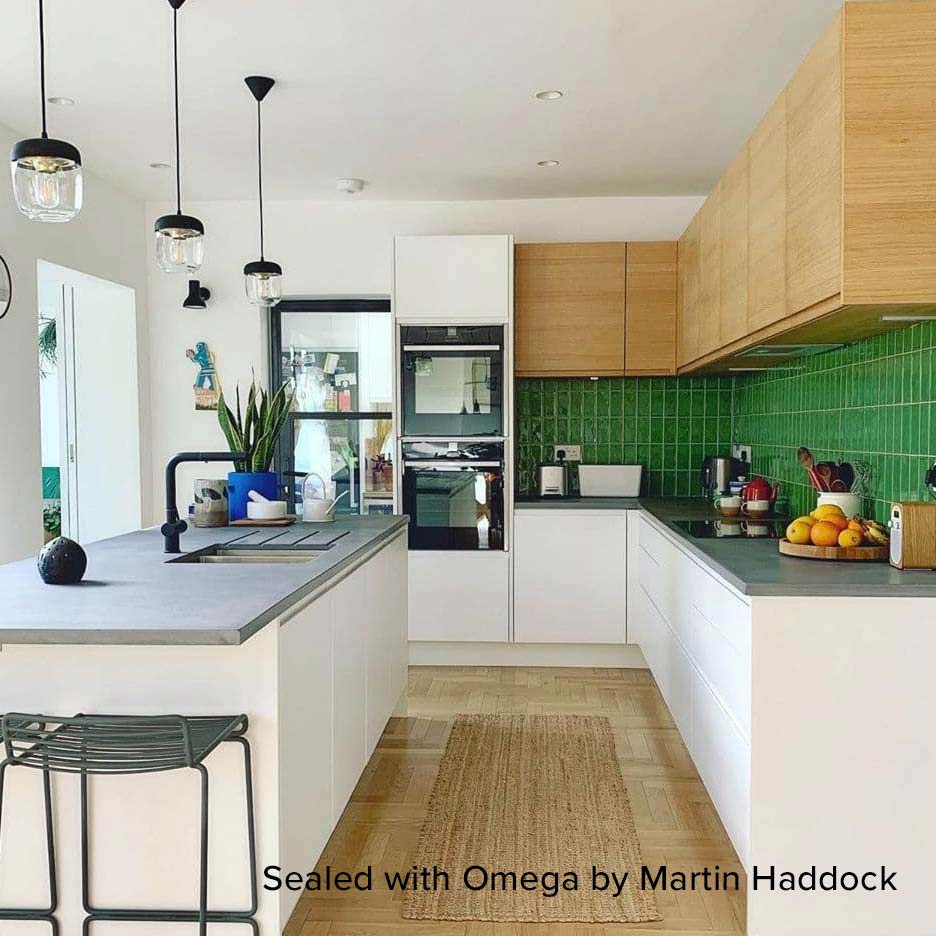
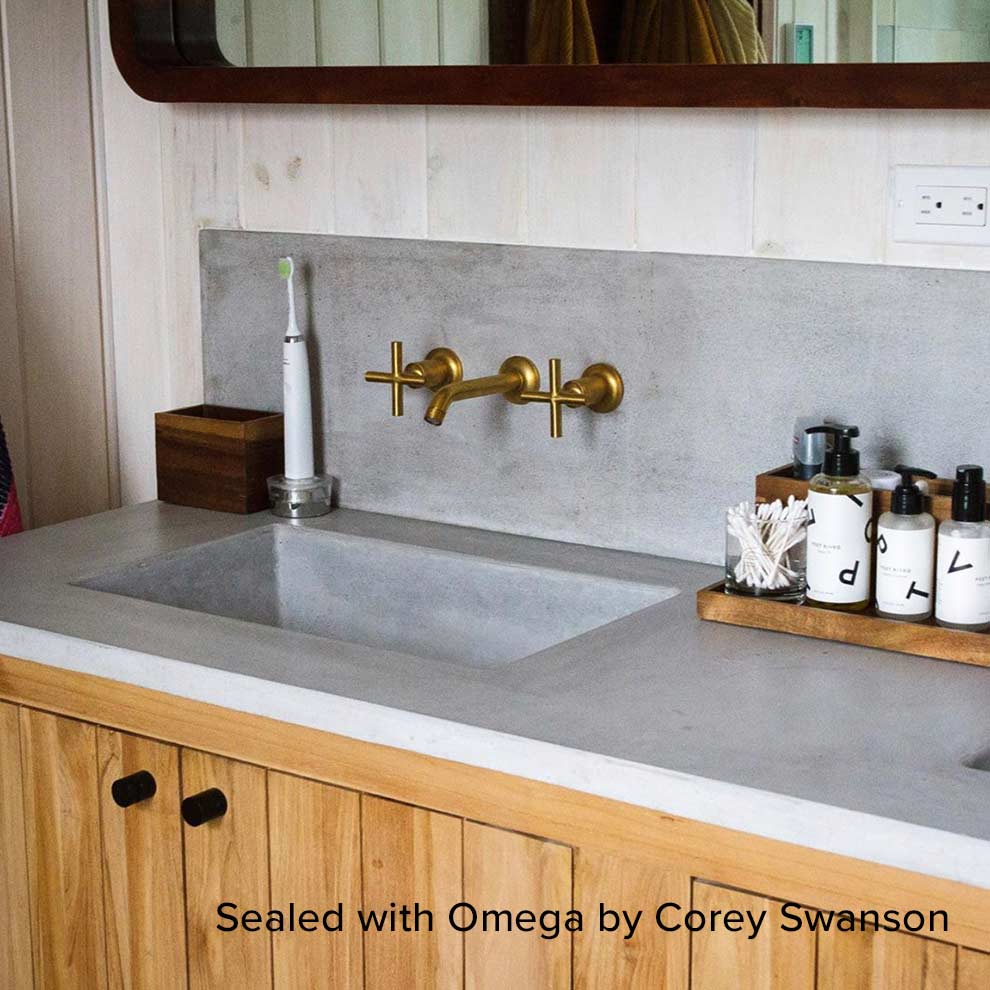
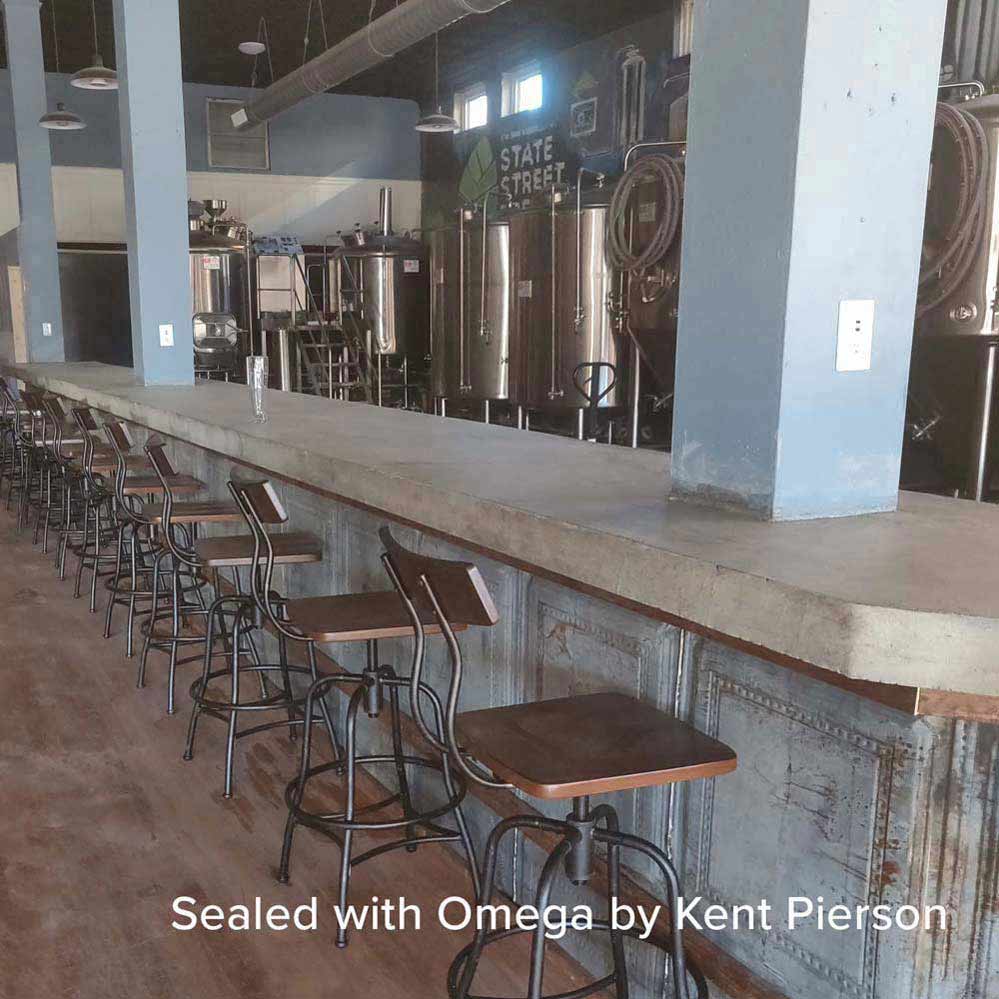
“Yes you have to follow the directions, but when you do, Omega just works. Time and again it works. I’ve sealed counters, bathroom and kitchen, hearths, fireplace surrounds, grill stations, and outdoor kitchens. The one factor that remains constant in all areas is that Omega works.” – Adam Knoblauch, Professional Fabricator
Get Professional Protection with Omega →
Coverage: 170 sq ft per kit (up to 2 primer + 4 finish coats) | Cost: $0.76 per sq ft | View Complete Instructions
For DIY Homeowners and Indoor Residential Projects: Ovation Concrete Countertop Sealer
For DIY projects, we developed Ovation in 2020 – the first single-component sealer that delivers professional-level stain and acid resistance without the complexity of two-part systems.

How Ovation Performs on the 5 Critical Factors
Stain and Acid Resistance: Ovation provides excellent protection against wine, coffee, lemon juice, and oil. It delivers professional-level performance in our 24-hour stain tests.
Long-Term Durability: Ovation creates a durable, wear-resistant surface that doesn’t require annual resealing. Apply it properly and you’re done.
Food Safety: Ovation is food-safe once cured and complies with FDA guidelines. Water-based and non-toxic.
UV Stability and Outdoor Performance: Ovation is formulated for indoor use. For outdoor applications, use Omega instead.
Ease of Application: This is where Ovation excels for DIYers. It’s a single-component system – no mixing, no measuring, no chemistry. Just apply with a foam roller. Available in Satin or Gloss finishes to match your aesthetic.
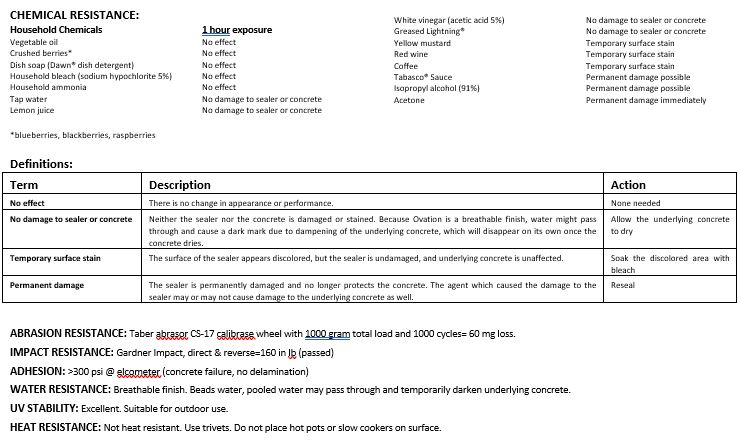
Here are the test data for Ovation:
Why DIY Homeowners Choose Ovation
- Simple: Single component, no mixing required
- Affordable: Only $69.99 for a typical kitchen
- Effective: Professional-level stain and acid resistance
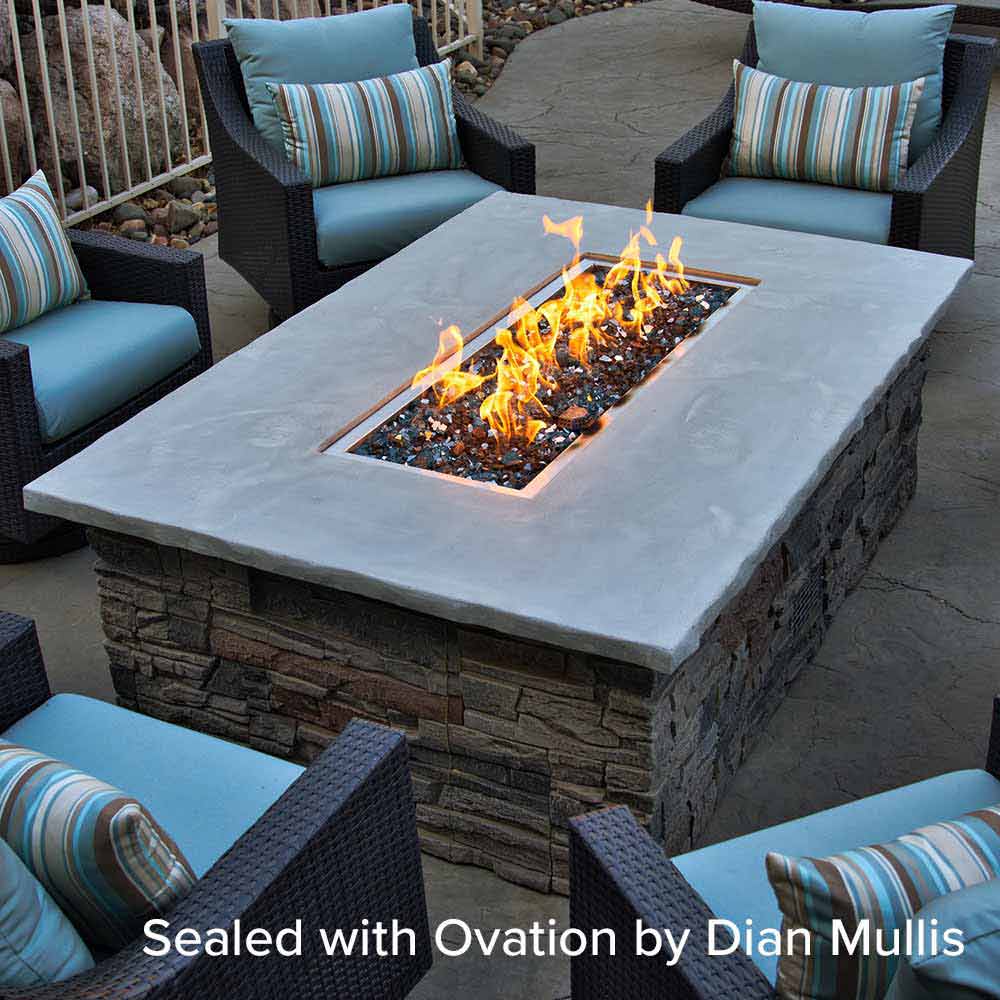
- Versatile: Perfect for countertops, fireplace surrounds, decorative concrete
- Choice of finishes: Available in Satin or Gloss
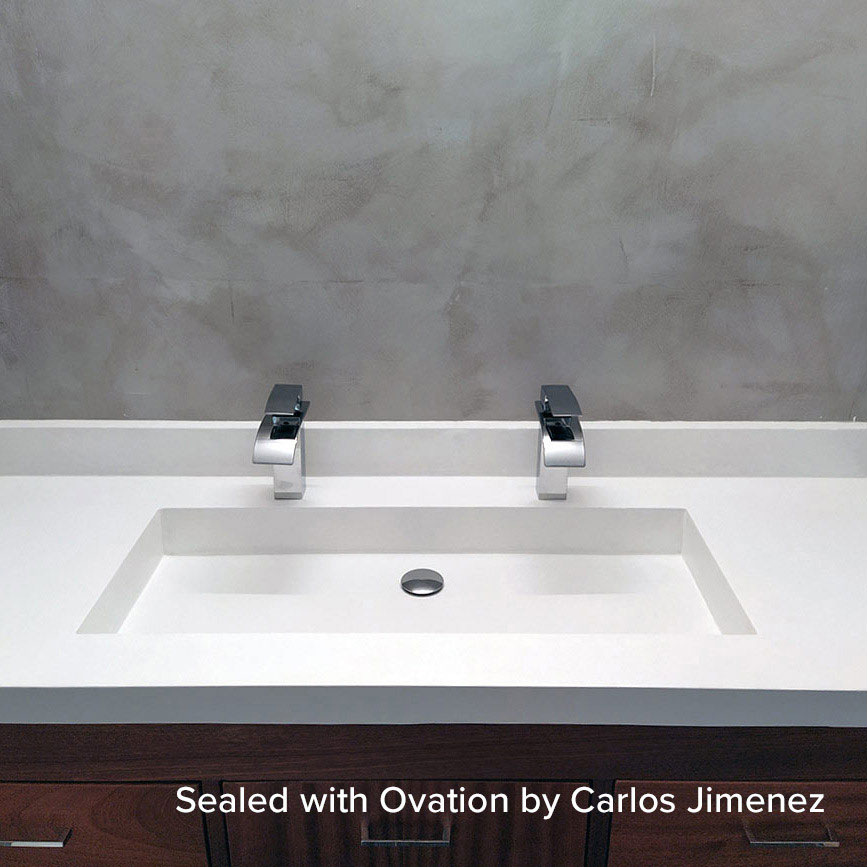
Get Ovation for Your DIY Project →
Coverage: 150 sq ft per quart | Cost: Less than $0.50 per sq ft | View Complete Instructions
Which Sealer is Right for Your Project?
Omega delivers professional-grade performance across all five critical factors. But if you’re a DIY homeowner doing your own countertops, you may not need all of its advanced features – and there’s a simpler, more affordable alternative: Ovation.
Choose Omega for:
- Professional fabrication and commercial installations
- Outdoor concrete (kitchens, bars, fire pits)
- High-traffic applications requiring maximum durability
- Projects where speed and no callbacks matter
Choose Ovation for:
- DIY residential projects
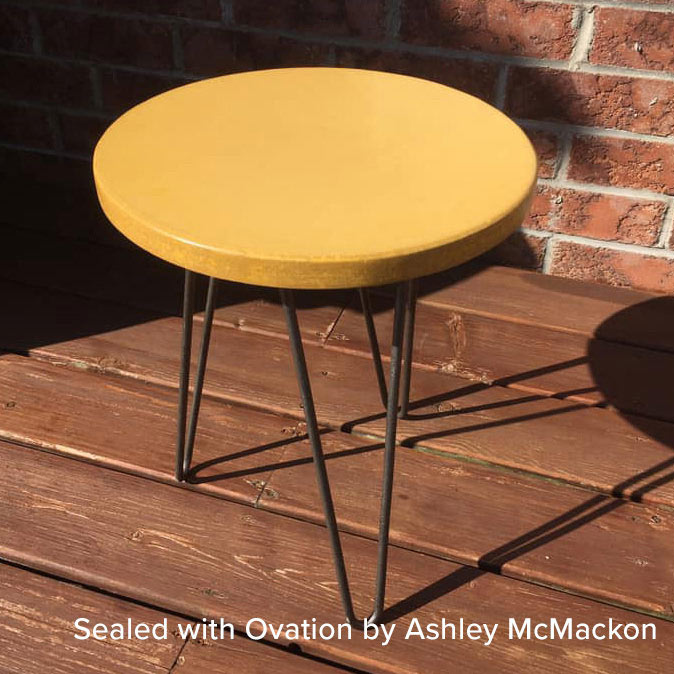
- Indoor countertops, fireplaces, side tables and wall panels
- Homeowners who want simpler application
- Excellent performance at a more accessible price point
Frequently Asked Questions
Following are the answers to commonly asked questions about concrete countertop sealers. You can also find further information in our extensive Free Training about Concrete Countertop Sealers.
What type of concrete sealer is best?
Define “best”. Where are you putting the sealer, and what do you need the sealer to do?
For example:
- If you’re sealing a concrete countertop in a kitchen, you need food safety, stain resistance, acid resistance, scratch resistance and heat resistance.
- If you’re sealing an outdoor bartop, you need UV resistance.
- If you’re sealing a fireplace surround, you need heat resistance.
- If you’re sealing concrete tiles, you need abrasion resistance.
For all of these applications, the ideal sealer would be inexpensive, easy to apply, and low or no maintenance.
Note that concrete floor sealers are not necessarily good concrete countertop sealers. Select a concrete sealer that has been specifically developed for concrete countertops.
What kind of finish do you put on a concrete countertop?
There are many kinds of concrete finishes with widely varying chemistries. To list just a few:
Penetrating Treatments:
- Densifiers/Hardeners
- Repellants
Topical Sealers:
- Wax
- Acrylics
- Epoxies
- Urethanes
- Polyurea/Polyaspartic
- Reactive Hybrid
A full discussion of all of these chemistries is beyond the scope of this article, but you can get a detailed explanation in this article about concrete countertop finishes. We also have a video seminar about sealer chemistry.
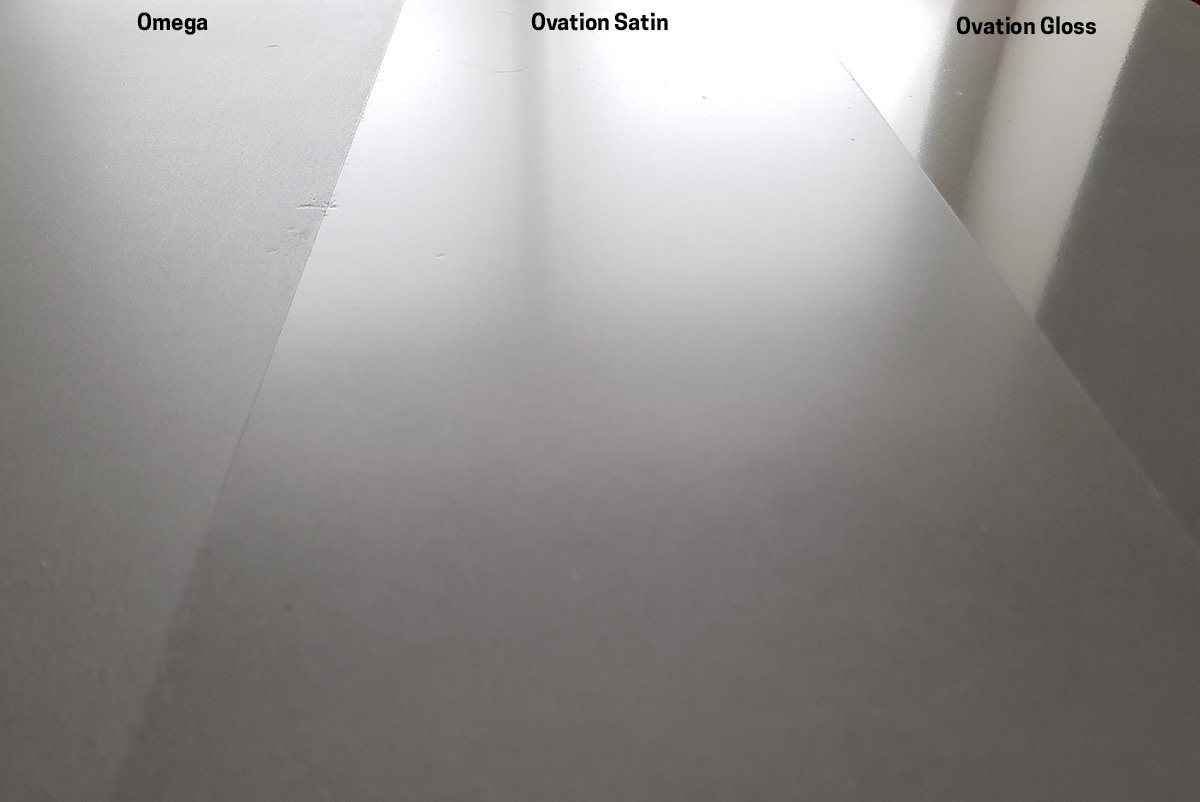
Consider also the sheen of the finish you are using. Some sealers come in a variety of sheens, such as matte, satin and gloss. For example, the following photo compares Omega Concrete Countertop Sealer, which is matte, with the two sheens available for Ovation Concrete Countertop Sealer, Satin and Gloss.
What is the best sealant for kitchen countertops?
Kitchen countertops are the most challenging application for concrete sealers. There are many criteria that are important both to consumers and those making the countertops.
Criteria that are important to clients (end users of the countertop):
- Enhance the appearance of the concrete without degrading the look or feel (i.e. not look like plastic)
- Non-porous
- Completely resist stains from food, oil and other common household substances
- Resist any etching from acidic substances like lemon juice and vinegar
- Resist heat from hot pots and pans taken directly from the oven or stove top at a wide range of temperatures
- Not degrade or yellow in UV sunlight
- Scratch-proof
- Food safe (non-toxic)
- Easily cleaned using common household cleaning products
- Provide long term protection without the need for frequent maintenance or reapplication
- Not peel, flake, chip or bubble
- Easy to repair if needed
Criteria that are important to the concrete countertop maker:
- Cheap
- Quick and easy to apply
- Strong client appeal
This is definitely NOT what you want:
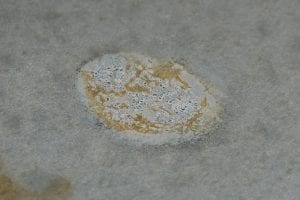
This concrete was actually sealed, but it still etched and stained (from Tabasco sauce). Not all concrete sealers are created equal!
How to clean a concrete countertop before sealing?
As with painting a wall, surface preparation is important. The concrete surface must be perfectly clean and dry before applying most sealers. In addition, the surface should be smooth, but NOT by using dry grinding.
For extensive, detailed information about surface preparation for concrete countertop sealers, click here.
What is the downside of sealing concrete?
For concrete countertops and other aesthetic elements, none. Bare concrete will not perform well for kitchen, bathroom, furniture, tile, firepit or any other aesthetic usage. Sealing is essential.
Is it better to roll or spray concrete sealer?
This depends on which sealer you are using. Almost all concrete countertop sealers are rolled on, or perhaps sprayed with a small, handheld spray bottle and then rolled. Only outdoor concrete sealers for applications like patios may be sprayed. Always follow the manufacturer’s application instructions.
Which is better, oil-based or water-based concrete sealer?
There are almost no oil-based concrete countertop sealers, with good reason.
Saturating concrete counter tops with any kind of oil will not seal or protect them. They will continue to stain no matter how much oil you soak them in. Oil does repel water, but many foods that contain oils won’t be repelled by the oil and will then stain the countertop. And acids will still etch the concrete. In addition, most oils would be considered natural to some extent, but natural oils can increase the microbial growth on the counters and thus be considered unsanitary.
A better question would be “Which is better, solvent-based or water-based concrete sealer”? This is relevant because in the past, all high performance concrete countertop coatings were solvent-based, and water-based finishes had issues with peeling or delamination. This is no longer the case, and has not been for decades. All of the best concrete countertop sealers, including Omega and Ovation, are water based.
How do you make concrete countertops look new again? Can you seal concrete over old sealer?
You can definitely make concrete countertops look new again, but you should almost never just seal concrete counterops over old sealer. There may be some types of “sealers”, such as wax, that would benefit from adding more after a period of time has passed. However, in general, most concrete countertop sealers should be applied to bare concrete or to properly prepared concrete surfaces.
For more information, see this article about how to reseal concrete countertops.
What time of year is best to seal concrete?
This question is probably geared towards decorative concrete applications such as patios, but it does point to an important consideration: temperature. Most sealers will undergo some kind of chemical reaction during their curing process. Temperature affects the speed and efficacy of chemical reactions. Some sealers cannot be applied if the temperature is too low or too high. Follow the manufacturer’s instructions.
Can you put too much sealer on concrete?
Yes. Almost any kind of concrete sealer will build up to some extent, and building up too much can change the appearance. It can also affect the adhesion of the sealer. Follow the manufacturer’s instructions about how many coats to apply. More is not always better.
How often should you seal concrete countertops?
How often do you need to paint your car? Modern, high quality concrete countertop sealers, such as Omega and Ovation, do not require reapplication. They should not stain, scratch, peel or etch under normal use.
Other “sealers”, such as wax, may need to reapplied frequently. The Concrete Countertop Institute does not recommend such sealers.
Can I apply a second coat of concrete sealer the next day?
With Omega, you can apply a second coat of concrete sealer the next hour. This is one of the biggest improvements that Omega brought to the market. Older urethane concrete countertop sealers require waiting until the next day to apply another coat.
Follow the manufacturer’s instructions for the timing between coats. Applying another coat too soon can result in problems such as bubbling or roller marks.
Omega was specifically designed to be faster and easier to apply than older urethane sealers.
How much does it cost to seal concrete countertops?
This depends on how much the sealer costs and how many coats are needed. It also may depend on the density of your concrete – more porous concrete may soak up more sealer. Omega and Ovation both specify how much they cost per square foot at various numbers of coats on typical, high quality concrete.
That said, the cost of concrete countertop sealer is generally very low compared to the retail price of concrete countertops. For example, a sealer might cost $1 per square foot, whereas the concrete countertop sells for $100 per square foot.
Sealer is not something to skimp on. It defines almost every desirable end user quality of a concrete countertop: sheen, stain/acid resistance, heat resistance, etc. The best concrete in the world sealed with a poor sealer will be a poor concrete countertop.